Top 10 Trading Mistakes Every Beginner Must Avoid
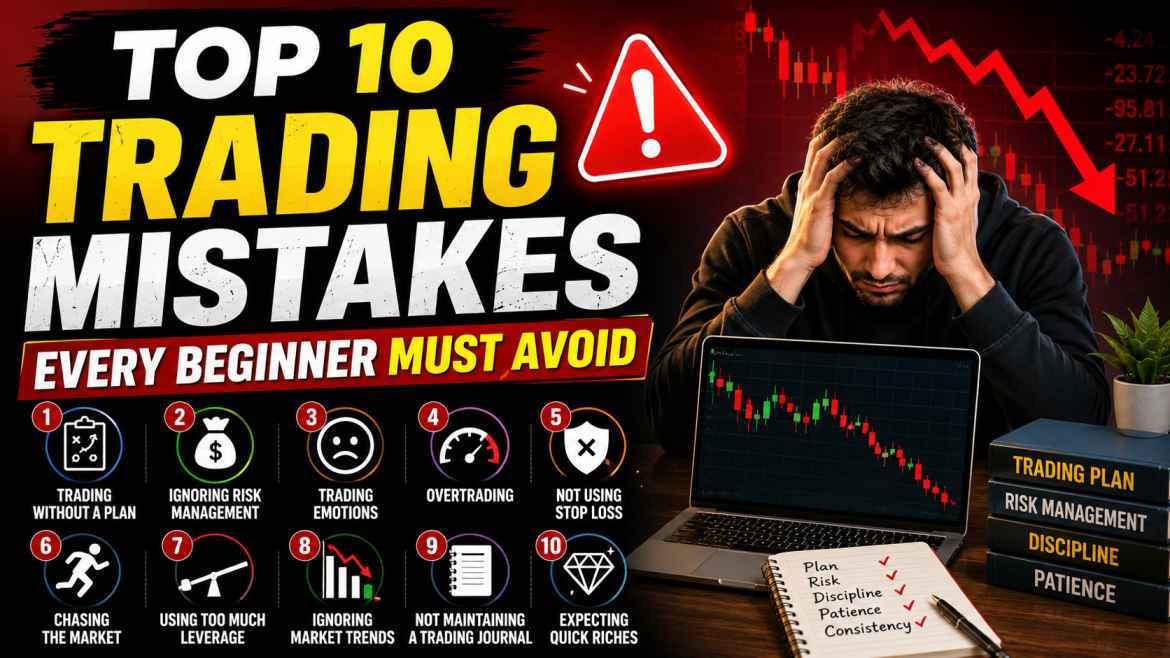
Top 10 Trading Mistakes Every Beginner Must Avoid
Trading in the stock market can be an exciting way to build wealth, but it is also one of the most challenging financial activities. Every successful trader has experienced losses, but what separates profitable traders from unsuccessful ones is their ability to learn from mistakes and improve over time.
Most beginners focus only on finding the perfect trading strategy, believing it will guarantee profits. However, the reality is that poor discipline, emotional decisions, and weak risk management are the biggest reasons traders lose money.
If you are just starting your trading journey, avoiding these common mistakes can save you thousands of dollars and help you become a more confident and consistent trader.
- Trading Without a Plan
One of the biggest mistakes beginners make is entering trades without a clear trading plan.
A proper trading plan should include:
- Entry conditions
- Exit strategy
- Stop-loss level
- Target price
- Risk per trade
Professional traders never rely on emotions. They follow predefined rules before entering any position.
Tip: Write your trading plan before the market opens and stick to it throughout the trading session.
- Ignoring Risk Management
Many new traders focus only on profits while completely ignoring risk.
Imagine risking 20% of your account on a single trade. A few losing trades can wipe out your entire capital.
Professional traders usually risk only 1% to 2% of their trading capital per trade.
For example:
- Trading Capital: $10,000
- Maximum Risk Per Trade: $100–$200
This approach helps traders survive losing streaks and stay in the game for the long term.
- Trading Based on Emotions
Fear and greed are the two biggest enemies of every trader.
Common emotional mistakes include:
- Buying because everyone else is buying.
- Selling due to panic.
- Holding losing trades hoping they recover.
- Closing profitable trades too early.
Emotional trading often leads to inconsistent results.
Instead, trust your strategy rather than your feelings.
- Overtrading
Many beginners believe that more trades mean more profits.
In reality, excessive trading usually results in:
- Higher brokerage charges
- More emotional decisions
- Increased losses
- Poor trade quality
Professional traders often take only a few high-quality trades instead of dozens of random ones.
Remember: Quality is always better than quantity.
- Not Using a Stop Loss
Trading without a stop loss is one of the fastest ways to lose money.
Markets can move against you within seconds.
A stop loss protects your trading capital by limiting losses on each trade.
Never remove or widen your stop loss simply because the market is moving against you.
Successful traders accept small losses instead of waiting for large ones.
- Chasing the Market
Many beginners experience FOMO (Fear of Missing Out).
They see a stock moving rapidly and jump into the trade without any analysis.
Unfortunately, they often buy near the top, just before prices reverse.
Instead of chasing price movements:
- Wait for proper setups.
- Follow your trading strategy.
- Be patient.
The market provides opportunities every day.
- Using Too Much Leverage
Leverage allows traders to control larger positions with less capital.
While leverage can increase profits, it also multiplies losses.
Many beginners overuse leverage because they dream of making quick money.
Professional traders use leverage carefully and understand the risks involved.
If you are new to trading, start with smaller position sizes until you gain experience.
- Ignoring Market Trends
Trying to fight the trend is another common beginner mistake.
The saying "The trend is your friend" exists for a reason.
Buying in a strong downtrend or short-selling during a strong uptrend is extremely risky.
Before entering any trade, identify whether the market is:
- Uptrend
- Downtrend
- Sideways
Trading with the trend generally improves your probability of success.
- Not Maintaining a Trading Journal
Many traders never review their previous trades.
Without a trading journal, it becomes difficult to identify mistakes and improve performance.
Your journal should include:
- Entry price
- Exit price
- Trade setup
- Risk-reward ratio
- Profit or loss
- Emotional state during the trade
- Lessons learned
Reviewing your journal every week helps you discover patterns in your trading behavior.
- Expecting Quick Riches
Social media often creates unrealistic expectations about trading.
Many influencers only show winning trades while hiding losses.
The truth is that successful trading takes:
- Education
- Practice
- Patience
- Discipline
- Continuous learning
Professional traders focus on consistency rather than getting rich overnight.
Treat trading like a business, not a lottery ticket.
Bonus Tips for Beginner Traders
To improve your trading journey, follow these habits:
- Learn one strategy thoroughly before trying another.
- Practice using a demo account.
- Risk only what you can afford to lose.
- Focus on consistency instead of huge profits.
- Avoid revenge trading after losses.
- Continue learning through books, market analysis, and educational resources.
Small improvements made consistently can produce excellent long-term results.
Final Thoughts
Every trader makes mistakes, especially in the beginning. The goal is not to avoid losses completely but to avoid unnecessary losses caused by poor decisions.
By creating a trading plan, managing risk properly, controlling emotions, and keeping a trading journal, you can significantly improve your chances of long-term success.
Remember, successful trading is a marathon—not a sprint. Focus on learning, stay disciplined, and continuously refine your strategy. Over time, these habits will help you become a smarter and more confident trader.
Frequently Asked Questions (FAQs)
- What is the biggest mistake beginner traders make?
The biggest mistake is trading without a proper plan and ignoring risk management.
- How much should I risk on one trade?
Most professional traders risk only 1–2% of their trading capital on a single trade.
- Why is a stop loss important?
A stop loss protects your capital by automatically limiting losses if the market moves against your position.
- Should beginners use leverage?
Beginners should use little or no leverage until they gain sufficient trading experience.
- Why should I keep a trading journal?
A trading journal helps you analyze your performance, identify recurring mistakes, and improve your decision-making over time.