Why a Trading Journal is the Secret Weapon for Profitable Traders
Title: Why a Trading Journal is the Secret Weapon for Profitable Traders
Introduction Have you ever wondered why professional traders consistently outperform the market while others struggle to break even? The secret isn't just a "holy grail" strategy or expensive software. Most successful traders share one common habit: they maintain a Trading Journal.
A trading journal is not just a spreadsheet of your wins and losses; it is a comprehensive business log that acts as the ultimate feedback loop for your trading performance.
Why is a Trading Journal Essential?
- Emotional Discipline: Trading is often a battle against your own psychology. By documenting your mindset before entering a trade (e.g., were you feeling greedy, fearful, or impulsive?), you can identify recurring emotional patterns that lead to bad decisions.
- Identifying Strengths and Weaknesses: When you review your journal, you will notice patterns. Perhaps you are profitable during morning sessions but lose money in the afternoon. A journal helps you stop repeating the same mistakes.
- Strategy Optimization: A journal allows you to test your strategy statistically. You can easily calculate your "Win Rate" and "Risk-Reward Ratio," helping you refine your approach based on data, not gut feelings.
What Should You Include in Your Trading Journal? To make your journal effective, ensure you track the following data points for every single trade:
- Trade Date & Time: To track your most productive trading hours.
- Asset Symbol: The stock or currency pair you traded.
- Entry & Exit Strategy: What was your technical trigger? (e.g., RSI Divergence, Support Breakout).
- Position Size & Risk: How much capital did you risk, and was it within your limits?
- Outcome: Final profit or loss in terms of R-multiple (Risk units).
- Trade Sentiment: One sentence on how you felt during the trade.
How to Get Started? You don't need complicated software to start. You can use:
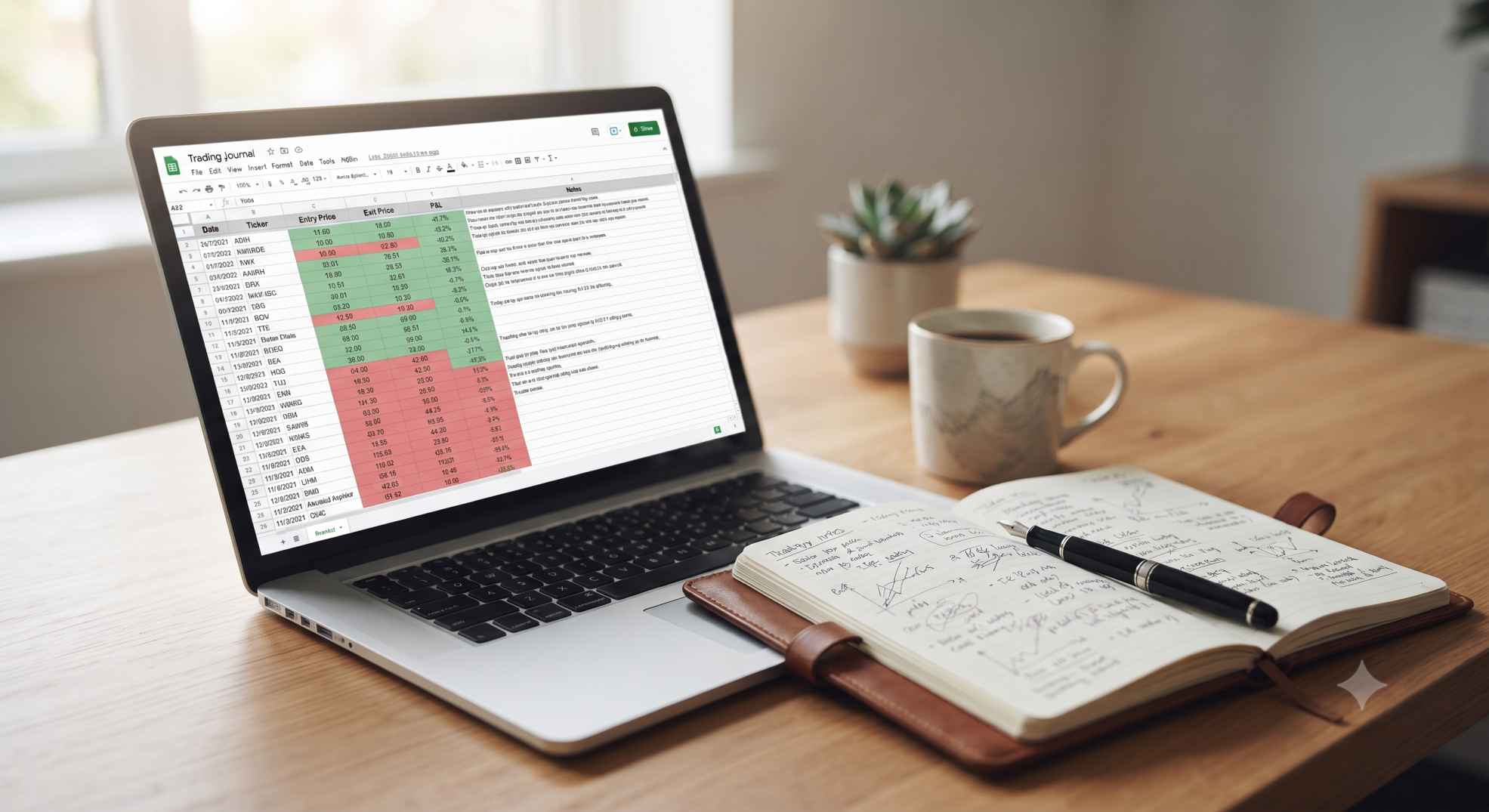
- Google Sheets/Excel: Highly customizable and great for beginners.
- Physical Notebook: Good for those who prefer writing by hand.
- Digital Platforms: Using dedicated tools like
tradingjoural.incan help automate the process and provide you with better insights and analytics.
The Bottom Line Treating trading like a hobby will pay you like a hobby. Treating it like a business—by keeping meticulous records—will pay you like a business. If you aren't journaling your trades, you aren't really trading; you are gambling. Start your trading journal today and watch your consistency improve.
Disclaimer: Trading involves significant financial risk. The content provided on this website is for educational purposes only and does not constitute financial advice. Always perform your own research and consult with a professional financial advisor before investing.